Home Management Isn’t Just Cleaning: Schedules, Lists & Mental Load
When people think about running a home, they think about cleaning.
Vacuuming. Dishes. Laundry.
But the real work?
The invisible work?
That’s the part no one sees.
Home management isn’t just wiping counters — it’s managing the mental load that keeps everything (and everyone) functioning.
And if you’re a mom, especially a working mom, you already know… the brain never clocks out.
What Is “Invisible Work”?
Invisible work is everything that has to be remembered, anticipated, planned, and emotionally managed before it even becomes a task.
It’s:
- Knowing when the toddler is about to outgrow her sneakers
- Remembering the ballet tuition deadline
- Scheduling doctor appointments before someone gets sick
- Keeping track of school spirit days
- Planning dinners while driving home from work
- Mentally noting that we’re low on paper towels
- Coordinating birthdays, holidays, and family gatherings
- Remembering who likes what and who can’t eat what
It’s the constant running checklist in your head.
No one assigns it to you.
No one logs the hours.
But if you stopped doing it — everything would feel it.
Cleaning Is a Task. Managing Is a System.
Cleaning is physical.
Home management is strategic.
It’s:
- Systems
- Calendars
- Grocery cycles
- Budget tracking
- Emotional regulation
- Anticipation
It’s thinking three steps ahead at all times.
You’re not just “doing laundry.”
You’re calculating school uniforms, weekend outfits, and making sure there’s a clean favorite hoodie for picture day.
You’re not just “cooking.”
You’re meal planning around schedules, preferences, allergies, budgets, and energy levels.
That’s executive functioning at a high level — and most women are doing it daily without recognition.
The Mental Load Is Heavy — Especially for Working Moms
When you work full-time and run a household, your brain becomes project manager of:
- Your job
- Your children
- Your partner
- Your home
- Your social life
- Your extended family
- Your own goals (if there’s any space left)
And here’s the part no one says out loud:
Even when someone “helps,” you’re often still the one delegating.
Which means you’re still carrying the management role.
How I Manage the Invisible Work (Without Breaking Down)
I had to stop pretending I could hold it all in my head.
Here’s what’s been helping me:
1. One Master Calendar
Everything goes in it. Work deadlines, school events, personal goals, even self-care. If it’s not written down, it becomes mental clutter.
2. Sunday Reset Ritual
A quick 30–45 minute reset:
- Check the week ahead
- Review meals
- Confirm appointments
- Lay out school items
This lowers weekday stress instantly.
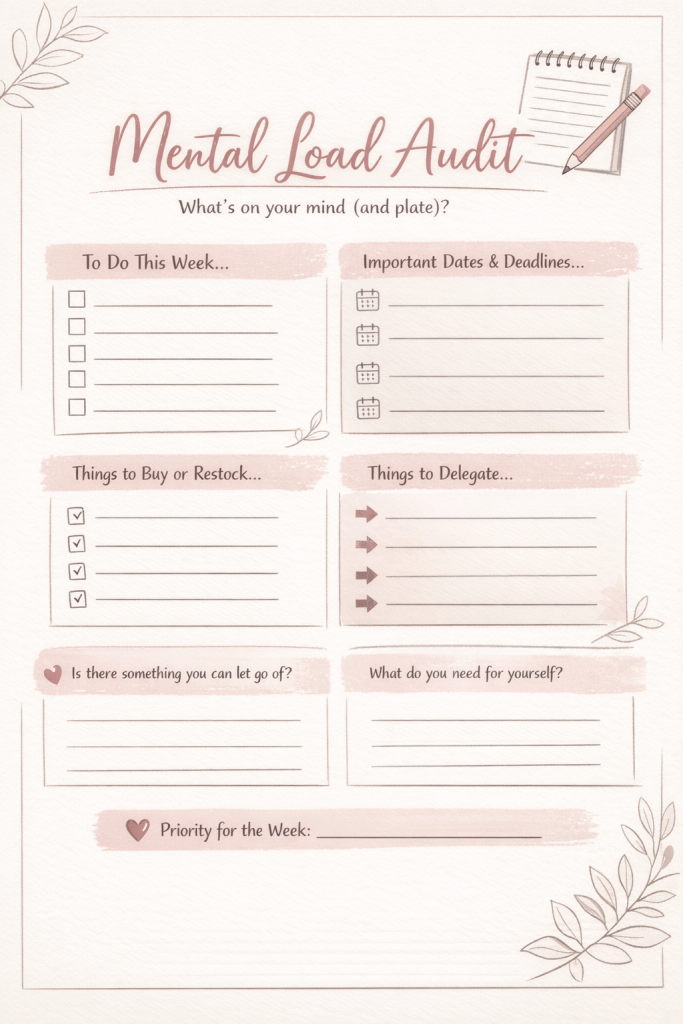
3. Running Lists
Instead of remembering everything, I keep:
- A grocery list that lives on my phone
- A “to buy soon” list
- A “don’t forget” list
Your brain is not meant to be storage. It’s meant to process.
4. Delegation Without Guilt
Not “helping” — shared ownership.
There’s a difference.
The Emotional Side No One Talks About
The hardest part isn’t the tasks.
It’s the emotional weight of:
- Wanting everyone to feel secure
- Anticipating needs before they’re spoken
- Making sure birthdays feel special
- Making sure no one feels forgotten
That level of care is beautiful.
But it’s also exhausting.
And if you’re feeling unseen in that work — you’re not dramatic. You’re human.
If You’re Carrying It All
Let this be your reminder:
- You are not “just cleaning.”
- You are managing operations.
- You are preventing chaos daily.
- You are running logistics, finance, nutrition, scheduling, and emotional regulation under one roof.
That’s leadership.
That’s executive function.
That’s invisible labor.
And it matters.
Final Thought
Home management isn’t about perfection.
It’s about systems that protect your peace.
If you’re overwhelmed, it doesn’t mean you’re failing.
It means you’ve been carrying too much without support.
You deserve recognition.
You deserve partnership.
And you deserve rest.
Because invisible work is still work.

 Notes By Kae
Leave a comment